ALL POSTS
FROM ENCLOSERS TO ENVIRONMENTAL GUARDIANS
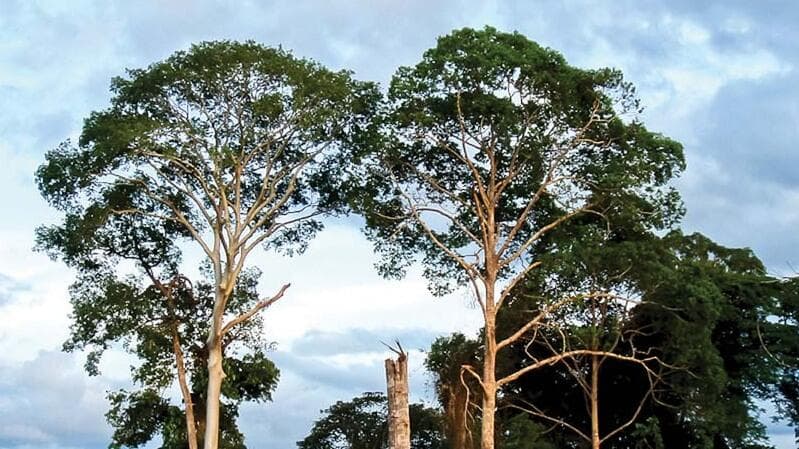
Let's get to know Jekie, a 39-year-old man from Karuing village, Kamipang, located in Katingan district, Central Kalimantan. Since he was a teenager, his youth was filled with activities going in and out of the forest to cut down trees (illegal logging). The wood he cut down was then sold to meet his living needs. Cutting down forests was a common activity for the local community at that time.
However, since the issuance of PP No. 44 of 2004 concerning Forestry Planning, the logging activities that Jekie had been carrying out were stopped around 2005. This was not easy to do considering that cutting down trees in the forest was Jekie's main source of livelihood. However, because he was afraid of legal sanctions, Jekie turned to being a fisherman who fished around the Punggu Alas and Katingan rivers.
When several institutions raised awareness among the community, driven by curiosity, Jekie tried to join in the activity. One of the activities that Jekie participated in was awareness raising activities and community empowerment studies conducted by the local government supported by the WWF Indonesia Foundation in Karuing village. For example, with proper fishing practices, the fish resources in the river are maintained and their livelihoods are guaranteed.
As time went by, Jekie gradually began to understand the importance of protecting the environment. It turned out that the logging activities that had been carried out had a negative impact on the environment and were not sustainable. He also played an active role as a villager in expressing his opinions in discussions in his village, for example in preventing unsustainable fishing practices, actively participating in patrols to prevent fires as a member of the Fire Awareness Community (MPA) around the Katingan and Sebangau rivers during the dry season, and actively participating as a village community in flood control activities in his village during the rainy season. Jekie also participated in vegetable and stingless bee honey cultivation activities.
There are better things than just taking what is in nature, such as environmental services that have great potential for the long term, for example ecotourism. This is what made Jekie interested in participating when the Keruing Village Tourism Hub was established, it is no wonder that Jekie was then chosen by the community to become its chairman in 2010.
The Keruing Village Tourism Hub collaborates with the Sebangau National Park Office in the form of managing two accommodation units in Punggu Alas and managing nature tourism services in Punggu Alas which include providing transportation facilities for kelotok ces / small kelotok and canoes, providing food and drinks, providing tour guides or guides, providing souvenirs; providing local arts and culture attractions / traditional welcomes, and providing porter services. The development of ecotourism, especially in the Punggualas Area with special tourism selling points for observing wild orangutans, river tours, exploring native tropical forests and bird watching and observing endemic Borneo wildlife (https://www.menlhk.go.id/site/single_post/357).
Jekie said, "Why damage the environment and get legal sanctions if by protecting and living side by side with nature we can get benefits." Even though he intends to resign, the community still supports Jekie as the head of the Karuing Village Tourism Node.
In this pandemic era, it certainly has an impact on the activities of the Karuing Village Tourism Node, although ecotourism assistance activities have decreased, Jekie's intention to protect the environment has never waned. According to Jekie, what causes people to be careless and carry out unsustainable natural resource extraction practices is a lack of knowledge, if people know that there is something more beneficial, of course all people will support it, for that Jekie continues to strive to play an active role in his village in raising public awareness for the sustainable use of natural resources.

Building a Future in Which Humans Live in Harmony with Nature