ALL POSTS
RATTAN, THE GUARDIAN OF KALIMANTAN'S FOREST
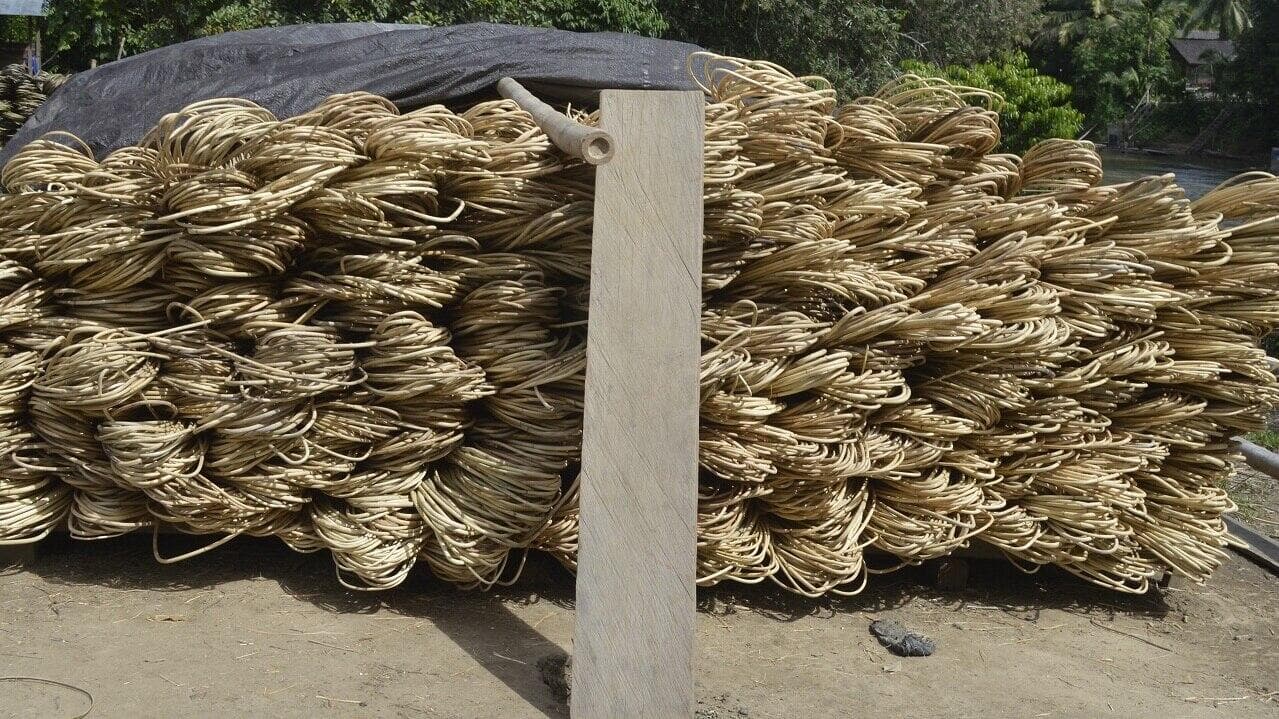
Sustainably produced rattan helps secure critical habitat for wildlife while improving livelihoods. In a move that could benefit farmers and biodiversity, a district on the island of Borneo has become the second place in the world to produce rattan certified by the Forest Stewardship Council (FSC).
The Katingan Rattan Farmers Group, or P2RK, represents more than 200 farmers in Central Kalimantan, part of the island of Borneo. Their certification is the result of years of collaboration with WWF.
Harvesting rattan, a climbing palm plant native to the region, can be a sustainable way for local communities to earn a living. Widely used in furniture, crafts and other applications, rattan supports a global industry worth more than US$4 billion a year. Because rattan needs trees to grow, it can provide an incentive for communities to conserve and restore forests on their land.
However, the prices paid to rattan harvesters in Indonesia are very low. As a result, many smallholder farmers are turning away from rattan production to more sustainable alternatives. With FSC certification, P2RK farmers are in a stronger position to get higher prices from buyers who supply high-value markets. WWF research shows that FSC-certified operators - especially smallholders in tropical countries - earn higher incomes than those who are not certified.
"Because they do not get economic benefits, some farmers have sold their rattan fields to palm oil companies, or converted them to other crops such as bananas, vegetables, or rubber," said Joko Sarjito, manager of the Global Forest & Trade Network (GFTN) WWF Indonesia. "Another option is illegal gold mining, which gives them quick cash for their daily needs, but is currently a major threat to the environment in Katingan."
"The area where P2RK operates is identified as a High Conservation Value (HCV) forest, so protecting it by implementing responsible rattan management is essential," said Sarjito.
This achievement marks the first time a non-timber forest product (NTFP) has been certified by FSC in Indonesia.
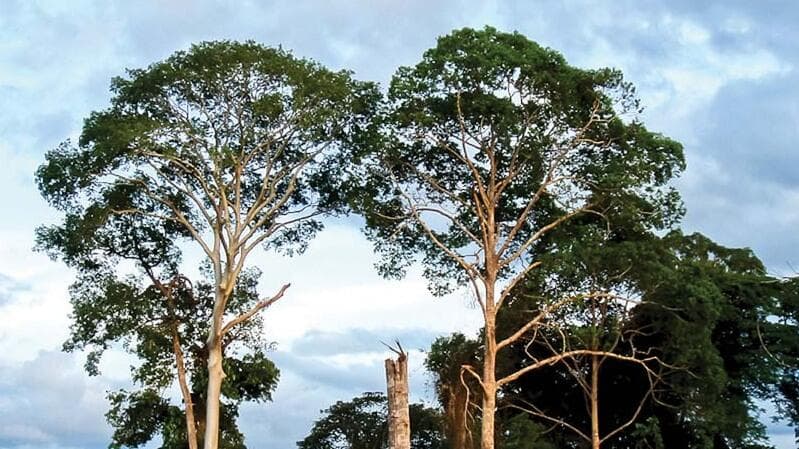
This old-growth dipterocarp forest provides suitable habitat for orangutans, as well as other endemic primates and birds. Since most of Borneo’s endangered orangutans live outside protected areas, conserving their habitat on community lands is critical.
"If the trees are disturbed or cut down, the growth of the rattan will be disrupted and its quality will decline," said P2RK secretary general Oscar Sukah. "The farmers participate in maintaining and preserving the forest to maintain certification."
WWF-Indonesia began working with P2RK in 2011 to help them prepare for certification, having developed similar projects in Laos and the Greater Mekong. The process of gaining certification was challenging. Previously, there was no formal recognition of who owned the land, or how much rattan was being harvested. WWF worked with communities, village leaders and local governments to map and legally register land ownership, and conducted surveys to determine the volume of rattan on farmers' land and how much could be sustainably harvested each year.
WWF also supported P2RK to register as a business, create a management plan, and implement a system for recording harvesting and transportation. P2RK now has a traceable log system, meaning the rattan can be tracked from the field to the processing plant.
Currently, the 209 farmer members can harvest a maximum of 29 tonnes of dry rattan per month, across 691 hectares of land. To ensure sustainability, the plants can only be harvested every two years, once they have reached maturity, and are cut selectively, rather than the entire clump. WWF-Indonesia has calculated that in five years, P2RK will manage 11,791 hectares, producing 474 tonnes of dry weight per month as more members join. There are also plans to replicate the program across the landscape.
"With certification, there is an increase in the value of rattan products so farmers feel safe and maintain their rattan gardens," said Sarimanto, a member of P2RK. "That way, they can send their children to school or build a house."
The project is financially supported by IKEA, through its partnership with WWF. The Swedish home furnishings giant uses rattan in more than 100 of its products, from outdoor furniture to baskets and lampshades. From the beginning of 2018, IKEA will include rattan in the scope of its forestry standards – meaning all suppliers will have to meet minimum standards, and start working towards more sustainable production.
“This is a new area for us and our suppliers, so we have been working closely with WWF to define what more sustainable rattan production looks like, and understand issues such as ownership rights and traceability from forest to furniture,” says Mikhail Tarasov, IKEA’s Global Forestry Manager.
“We hope that together we will be able to secure a traceable and sustainable supply of rattan. I believe there is a huge opportunity to improve the way rattan is grown and extracted. By supporting projects like this, we have a great opportunity to improve farmers’ livelihoods and ensure that forests will continue to exist.”
Building a Future in Which Humans Live in Harmony with Nature