ALL POSTS
MANGROVE, LAND SHIELD FROM WAVES IN LABUAN BAJO
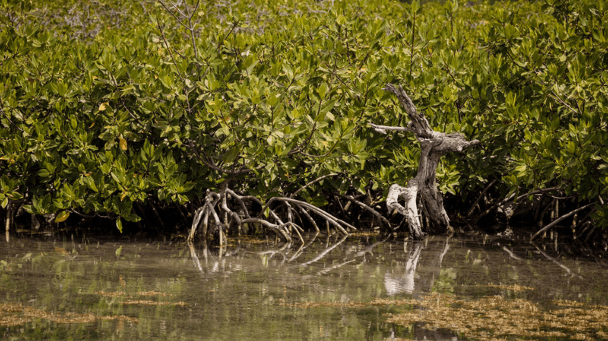
World Mangrove Day, which was inaugurated by UNESCO since 2015, is commemorated every July 26. This commemoration aims to raise awareness about the importance of the mangrove ecosystem and promote sustainable mangrove conservation. In Indonesia, based on the National Mangrove Map by the Ministry of Environment and Forestry in 2021, Indonesia has a total mangrove area of 3,364,080 Ha.
Taking this momentum, the East Nusa Tenggara Provincial Government through the Branch Office of the Marine and Fisheries Service for the East Manggarai, Manggarai and West Manggarai Working Areas, with the support of the Indonesian Capital Market and the WWF Indonesia Foundation, held a webinar with the theme 'The Role of Mangroves as the Front Guard to Protect Land from Waves' attended by 90 participants. Mangrove Conservation in Labuan Bajo is one of the major programs supported by the Indonesian Capital Market, including planting mangrove trees and educating about the importance of mangroves for the ecosystem, both to local communities and tourists visiting Labuan Bajo.
Acting Head of the NTT Provincial Marine and Fisheries Service, Stefania Tunga Boro, S.Pi, MM., said, "We need to pay attention to the role and function of mangroves again, with various threats that occur in development and other human activities, the existence of mangroves around us is very important. One of them is if we look at mangroves as a protector of land from waves," she said when opening the webinar.
This webinar also presented four speakers consisting of government representatives, environmental practitioners and community groups, namely Robertus Eddy Surya, S.Pi MP., as Head of the East Mangarai, Manggarai, and West Manggarai Service Branches; Paspha Ghaishidra Muhammad Putra as Public Relations Manager of IKAMaT (Inspiration of the Kesemat Alumni Family); Ahmad Burhan as Chair of the True Nature Group; and Muhammad Erdi Lazuardi from the WWF Indonesia Foundation.
This discussion also began with various regulatory information in maintaining the sustainability of the mangrove ecosystem, one of which is contained in Law of the Republic of Indonesia No. 1 of 2014 concerning Amendments to Law of the Republic of Indonesia No. 27 of 2007 concerning Management of Coastal Areas and Small Islands. Robertus Eddy explained the function of mangroves physically, ecologically and economically. Physically, the existence of mangroves can reduce storms, tsunami waves, and abrasion. Ecologically, mangroves function in the process of primary productivity, spawning, nursery/rearing and feeding grounds for many biota, especially various types of fish, crabs and shrimp, export nutrients, pollutant traps and carbon sinks. Economically, many benefits can be obtained both directly and indirectly, including environmental services. IKAMaT and the True Nature Group also conveyed their views on implementing mangrove protection schemes, rehabilitation efforts, utilization of mangrove ecosystems and community education. Mangrove protection schemes can be through research or mangrove data, training, making mangrove products, media, and donations. IKAMaT carried out rehabilitation efforts in Serang City and Tulungagung covering an area of 103.69 Ha with a survival rate of 71.3 percent of mangrove seedlings, while the Alam Sejati group carried out rehabilitation efforts in Golo Sepang Village covering an area of 53 Ha with a survival rate of around 60-70 percent.
Another interesting lesson was also conveyed by Ahmad Burhan, "The mangrove planting process was carried out collaboratively by the local community where at first they did not know that mangroves have ecological benefits to protect the land from the threat of waves and abrasion."
There are several collaborative spaces that can be carried out in West Manggarai Regency, including the development of mangrove tracking, education for the community, both school students and the general public, strengthening institutions to master digital information, supporting facilities for mangrove planting, monitoring activities carried out in mangrove forests and regular research. "One tree can become a forest, one smile can be attention, one kindness will bring blessings," concluded Burhan.
The Development of Conservation Areas in Indonesian Waters also supports the preservation of the mangrove ecosystem. "Opportunities and challenges from the aspect of natural assets, socio-economic and cultural as well as governance, namely Conservation Areas need to be managed effectively, optimizing mangrove protection in conservation areas in waters, which are currently only 2%. It can also optimize mangrove-based economic opportunities such as tourism, fisheries," said Muhammad Erdi Lazuardi.
The government is still targeting to restore the mangrove ecosystem by 600,000 ha. Erdi also said that the community can play a role by carrying out activities in accordance with existing guidelines, joining in mangrove planting actions, reducing the use of single-use plastics, or being active in networks or environmental activists.

Building a Future in Which Humans Live in Harmony with Nature